
In commercial construction, the margin for error on structural integrity is razor thin. While significant attention is paid to structural steel, foundation pours, and primary roof membranes, one of the most critical vulnerabilities of any commercial building sits right at the perimeter: the edge metal.
Data from the National Roofing Contractors Association (NRCA) and major insurance carriers consistently shows that a staggering percentage of commercial roof failures originate at the perimeter due to wind-uplift. When the edge metal fails, the entire roof system is compromised.
For General Contractors (GCs), architects, and specifiers in Texas, code compliance and risk mitigation demand a strict adherence to international building standards. This is where ANSI/SPRI/FM 4435/ES-1 certification becomes non-negotiable.
Understanding the Code: What is ES-1 Certification?
The International Building Code (IBC) strictly mandates that edge metal systems, including custom coping, fascia, and gravel stops, must be tested to resist specific wind loads calculated for the building’s geographic location, height, and surrounding terrain.
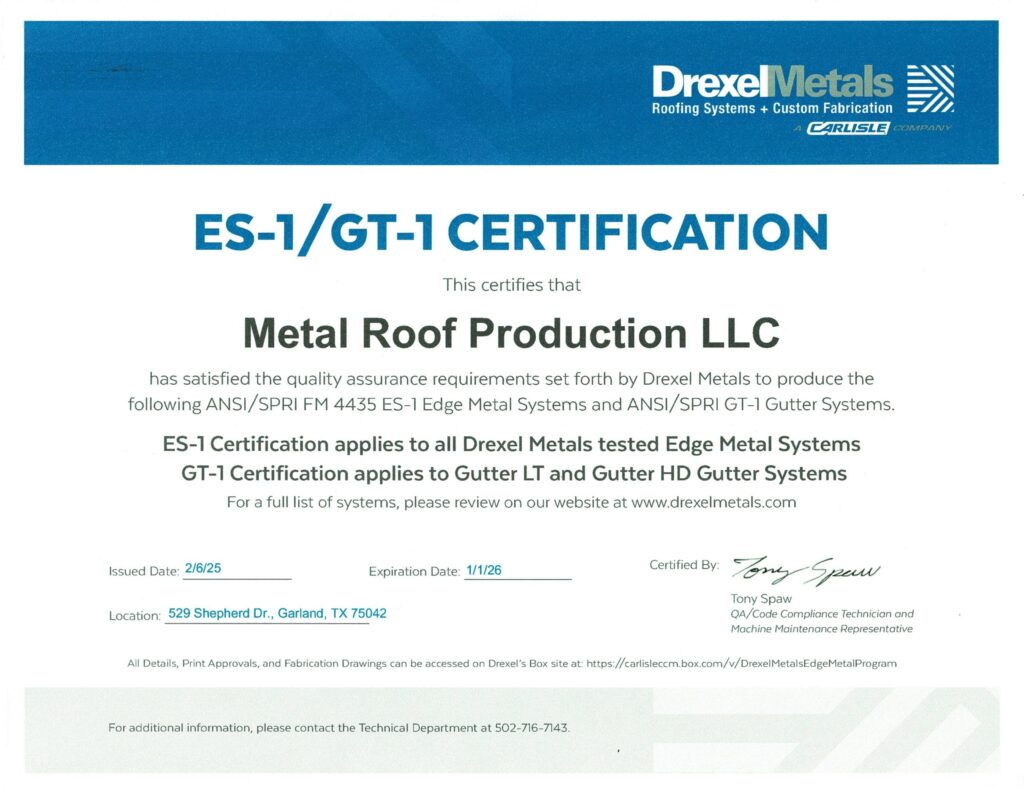
The standard used to measure this resistance is ANSI/SPRI/FM 4435/ES-1 (commonly referred to simply as ES-1). This testing regimen subjects edge metal to rigorous horizontal and vertical pressure testing to ensure it will not peel back or fail during severe weather events, such as high-velocity windstorms or coastal hurricanes common to the Texas region.
The Legal Reality for GCs: Installing non-certified, field-fabricated edge metal on a commercial project isn’t just a quality issue, it is a code violation. If a roof fails and the perimeter metal was not fabricated by an ES-1 certified shop, the GC and architect face severe liability, insurance claims can be denied, and the building will fail structural inspections.
The Problem with the Standard “Metal Guy”
Historically, roofing contractors have relied on independent local fabricators, the proverbial “metal guy” to bend perimeter flashings. While these small shops may deliver low up-front costs, they present massive systemic risks to commercial projects:
- Zero Certification: Standard localized shops lack the third-party testing, certified engineering, and ongoing auditing required to stamp a product as ES-1 compliant.
- Volatile Lead Times: Operating without a structured corporate workflow means your project timeline is at the mercy of their fluctuating backlog.
- Lack of Corporate Infrastructure: If a field failure occurs, un-insured or under-insured independent fabricators cannot absorb the financial liability, pushing the risk directly back onto the General Contractor.
De-Risking Your Supply Chain with Metal Roof Production LLC
At Metal Roof Production LLC, we operate as a dedicated, professional manufacturing partner to the commercial building trade. We have institutionalized sheet metal fabrication to eliminate the liabilities of traditional outsourcing.
- Fully ES-1 Certified Shop: We manufacture code-compliant, custom commercial edge metal systems engineered to withstand severe wind-uplift pressures.
- Advanced CNC Capabilities: Utilizing our computerized high-precision shears and brakes, we manipulate 20 to 28 gauge sheet metal into mathematically exact profiles. This ensures flawless architectural lines, consistent tolerances, and perfect interlocking joints across high volume orders.
- Commercial-Grade Risk Protection: We operate out of our permanent, fully staffed facility in Garland, Texas. We carry full Worker’s Compensation and comprehensive General Liability insurance, ensuring that your risk profile is completely covered from production to delivery.
Don’t Compromise the Perimeter
When specifying or purchasing architectural sheet metal for your next commercial build, verify the credentials of your manufacturer. Relying on an uncertified fabricator is a liability that can compromise an otherwise flawless construction project.
Partner with a corporate-grade manufacturer that understands deadlines, carries the necessary insurance, and possesses the formal technical certifications required to secure your building.